
1. Exhibition Room - The Monastery in the North Region23. Chapter Room - The religious power in the Monastery4. Dormitory - The occupation of the Monastery5. First Cell - The split between the communities of Grijó and Serra do Pilar6. Second Cell - Education in religious life vs. education in secular life7. Dome - The Monastery and the city of Porto8. Sacristy - The new designation of the Monastery9. Church - The refoundation of the monastery as Monastery of Santo Agostinho
 Cloister - The foundation and construction of the Monastery
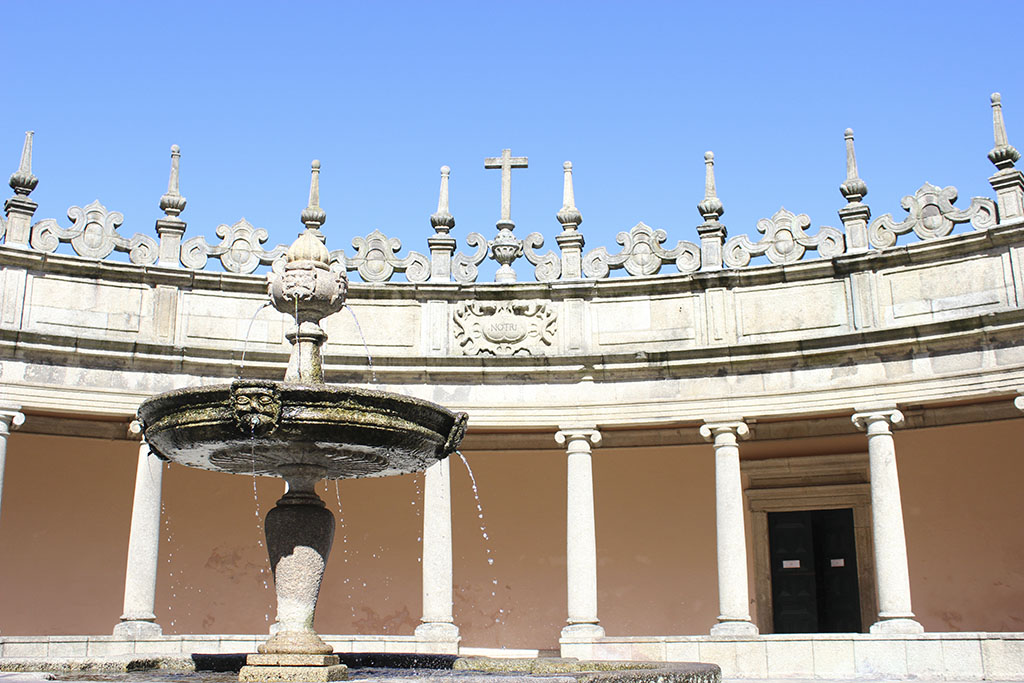
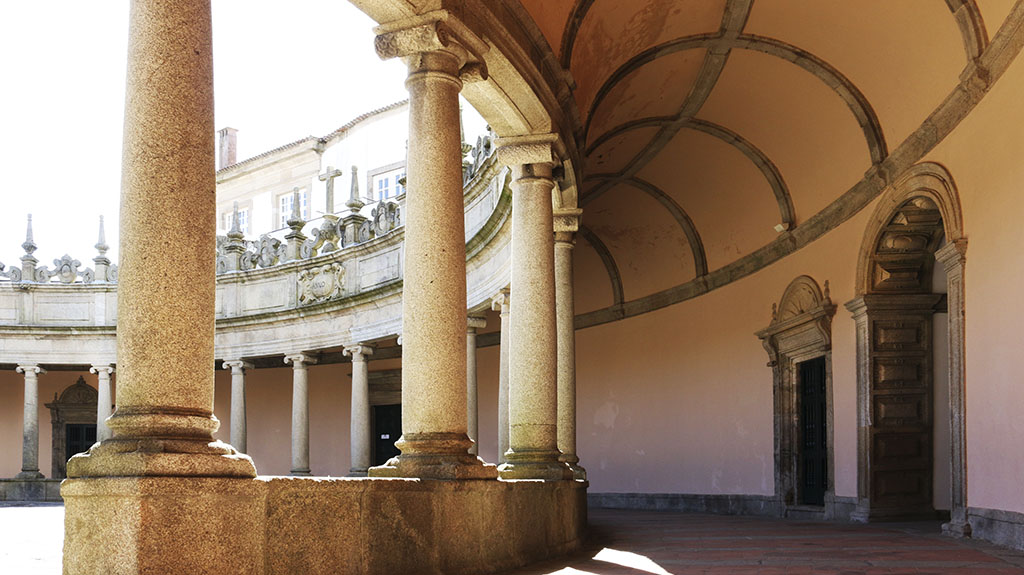
Part of the Porto Historic Centre, UNESCO World Heritage Site since 1996, the Monastery of Serra do Pilar was founded in 1537, as a result of the transfer of the clerical and rural Community of Grijó - Canons of the Order of St. Augustine - to a site near to the urban centre of Porto.
Although the authorship of the architectural work is unknown, there are enough documental references to the architects Diogo de Castilho and Jean de Rouen, to assure us that they are the authors of the architectural project for the Monastery of Serra do Pilar.
The monastery is a rare specimen - if not unique in the world - mainly because it's an unusual translation of the work of the Italian architect and theorist Francesco di Giorgio Martini into a monastic building.
Moreover with this, of course, we can see not only the influence of eclecticism, but also the appropriation of symbolic values in Renaissance buildings - the Monastery's building complex forms a 7: 2 rectangle, a proportion that reflects the average ratio between the height and width of the human body, prefiguring the perfection of the body of Christ.
Astronomy also played an important role in the construction of buildings at that time, and the Monastery of Serra do Pilar is no exception. The axis of the monastery was designed so that sunrise on the Saviour's Day, crosses the centre of the cloister and the church, unifying them, and serving as a kind of connection between Earth and Heaven - exemplifying the "imago mundi" characteristic of the monastery.