1. Exhibition Room - The Monastery in the North Region2. Cloister - The foundation and construction of the Monastery34. Dormitory - The occupation of the Monastery5. First Cell - The split between the communities of Grijó and Serra do Pilar6. Second Cell - Education in religious life vs. education in secular life7. Dome - The Monastery and the city of Porto8. Sacristy - The new designation of the Monastery9. Church - The refoundation of the monastery as Monastery of Santo Agostinho
 Chapter Room - The religious power in the Monastery
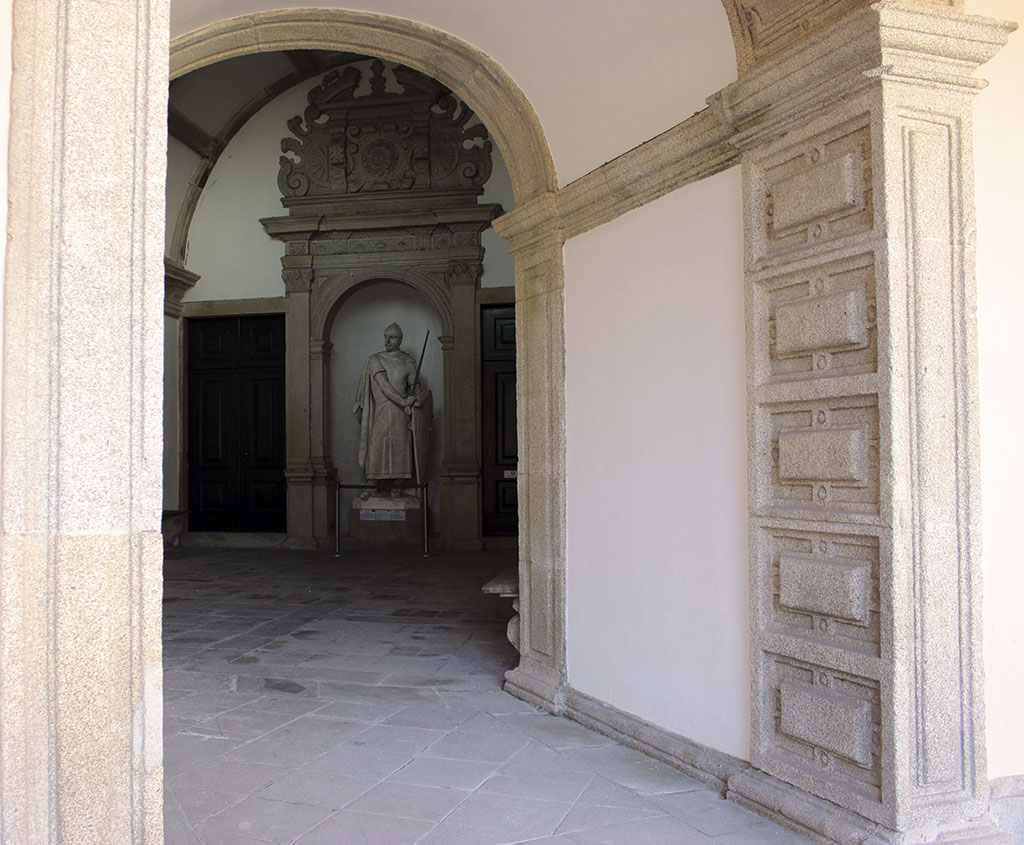
The Chapter Room was the place where the monks gathered for the reading of the Rules and discussion of the monastery's administrative issues. The strange configuration of this room is notable, it is the result of an enforced occupation of a space left vacant after the cloister was relocated for the second time, in 1690 (it is believed that the cloister was first relocated in 1590; and additional ornamentation was added to it in 1692). Manuel do Couto and João Manuel da Maia were commissioned to carry out the work, and they pledged to create the felled and hewn gateposts that were common in Nordic architecture at the end of the Seicento period.
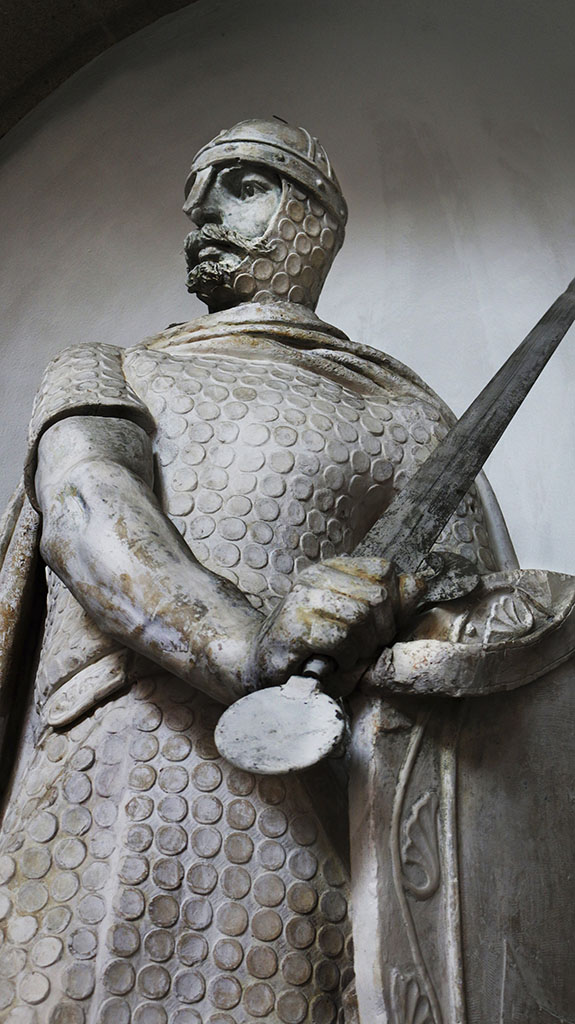
The Chapter Room is also marked by the presence of the original statue of D. Afonso Henrique, made by the Portuguese sculptor Soares dos Reis in 1887, which served as a template for several others scattered across Portugal.
These two points highlight the influence of Northern and Protestant Europe and the revival of major nonreligious figures, showing us some of the transformations in European Christianity at that time.
The European nations, for instance, were progressively basing themselves on the principles of absolute monarchy, and reinforced this through the promotion of national languages and symbols.
The Chapter Room leads our thoughts into the realm of Power. So, it's inevitable to reflect on the changes in the distribution and nature of Power during the Renaissance period. What impact did these changes have on the European nations?